What Actually is Acne?
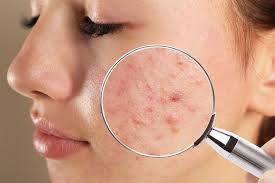
Acne is one of the most common skin conditions in the world, yet it is widely misunderstood. Often dismissed as a minor teenage problem or blamed on poor hygiene, acne is in reality a chronic inflammatory skin disorder influenced by biology, hormones, genetics, and the complex ecosystem of the skin. Understanding what acne actually is helps explain why it can persist into adulthood, why it can be difficult to treat, and why simple solutions rarely work.
The Structure of the Skin and Hair Follicles.
To understand acne, it is essential to understand the pilosebaceous unit, the structure where acne forms. Each pilosebaceous unit consists of:
- A hair follicle
- A sebaceous (oil) gland
- A hair shaft
Sebaceous glands produce sebum, an oily substance that lubricates and protects the skin. Sebum travels up the hair follicle and exits through a pore onto the skin’s surface. Acne develops when this normal process becomes disrupted.
How Acne Develops
Acne is not caused by a single factor but by a combination of four key biological processes:
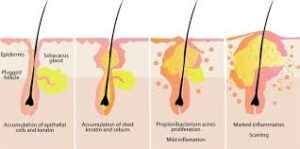
1. Excess Sebum Production
In acne-prone skin, sebaceous glands become overactive, producing more oil than the pore can handle. This excess oil creates an ideal environment for blocked pores and bacterial growth. Hormones called androgens play a major role in stimulating sebum production, which is why acne often appears during puberty and hormonal fluctuations.
2. Abnormal Skin Cell Shedding
Normally, dead skin cells are shed evenly from the lining of the hair follicle. In acne-prone individuals, these cells become sticky and shed irregularly, clumping together inside the pore. When mixed with excess sebum, they form a plug known as a comedone.
3. Bacterial Overgrowth
The skin naturally contains a bacterium called Cutibacterium acnes (formerly Propionibacterium acnes). In blocked, oil-filled pores, this bacterium multiplies rapidly. While C. acnes is not inherently harmful, its overgrowth triggers immune responses that contribute to inflammation.
4. Inflammation
Inflammation is what transforms a blocked pore into a visible, painful lesion. The immune system reacts to bacterial by-products and trapped debris, causing redness, swelling, tenderness, and pus formation. Acne is therefore best described as an inflammatory disease, not merely a cosmetic issue.
Side-Effects & Risks of Acne
There are a number of side-effects associated with acne (and not just the treatments). The side-effects have both physical and psychological factors.
Scarring
Acne can leave permanent scars on the areas of the body affected.
Ice-pick scars are deep narrow pitted indentations in the skin which resemble marks from a ice-pick. They often appear on the cheeks and the nose and are difficult to treat, but laser resurfacing and microneedling can help reduce their appearance.
Boxcar scars are sunken, round or oval indentations in the skin with sharp vertical edges resembling a “Box-like” shape. These kind of scars are often found on the cheeks and temples.
Rolling scars are broad, wave-like indentations with sloping edges creating an uneven texture which result after severe inflammation.
Post-Inflammatory Hyperpigmentation (PIH)
Post Inflammatory Hyperpigmentation is a darkening of the skin which may happen after a severe breakout. This is very common in dark skin and may be worsened by exposure to the sun. Some ways to manage this includes sun protection, topical agents, chemical peels and laser therapy. Treatments are aimed at reducing melanin production and preventing re-occurrence.
Post-inflammatory Erythema (PIE)
Post-Inflammatory Erythema is the flat red, pink or purple discoloration left on the skin after inflammation such as an acne break-out. This is caused by damaged and dilated capillaries and not by melanin. It’s a lot more common in people with light skin tones and may fade n their own after some time. It can be avoided in the first instance by avoiding picking and squeezing at the acne breakout and by using gentle skin-care to treat the outbreak. To treat it you may use a gentle routine with mild cleansers while avoiding harsh exfoliants. Some professional treatments such as laser treatments can help if necessary.
Chronic Acne Inflammation
Chronic acne inflammation is a persistent skin condition where acne outbreaks are very aggressive, recurr a lot and stay for a long time. This can be caused by clogged pores (oil, dead skin cells, bacteria such as C. acnes) trigger the immune system to cause large red, swollen and painful bumps. This type of acne can have a significant toll on someone both physically and psychologically. There may be some other triggers and causes for this such as hormonal changes, bacteria, Diet, lifestyle and genetics.
There are a lot of treatment options for this depending they type of the outbreak and what appears to work well on the individual. Treatments include Over-the-counter options like cleansers with salicylic acid, prescription topics for more severe outbreaks, oral medicines and lifestyle changes such as changing the diet.
Psychological Factors
Acne is not just physical as it can have a psychological impact on the individual. This is because acne affects visible areas such as the face and neck. This can impact a person’s confidence and their self-image.
Some of the psychological impacts acne may have on someone may include anxiety and depression and social avoidance. People may being to avoid photos, social events dating or even appearing in public as they may fear judgement from people.
Acne May Become a Medical Concern
Acne may become a medical concern when it is very severe, when it causes pain, when it leads to scarring and doesn’t respond to some treatments. It is a chronic condition which may need intervention from a GP or a dermatologist to prevent it from scarring and to alleviate the mental stress that it may cause.
The presence of nodules and cysts, large, firm, painful lumps which are filled with pus are a form of severe acne. To avoid scarring this must be seen to by a medical professional.
Prescription topicals include stronger retinoids, azelaic acid or combination cream that may be prescribed to the individual.
Procedure to treat the condition may include laser therapy, chemical peels and the professional draining of the cysts.
Acne – Lifestyle Factors
Lifestyle factors on their own don’t cause acne, but they can significantly exacerbate or improve the condition, especially when combined with genetics and hormones.
Foods that worsen acne
High-glycaemic foods like white bread, sugary snacks and fizzy drinks may worsen acne. This is because they raise insulin in the body which increases oil production.
Dairy foods, especially skimmed milk, may worsen acne because they are linked to higher IGF-1 Levels.
Ultra-processed foods are bad because they increase systemic inflammation/
Foods that are good for you
There are a lot of foods that are good for you and will help clear up your condition. Low-GI carbs like oats and brown rice, Omega-3 fats like salmon and flaxseed are good for you.
A lot of fruits and vegetables have anti-oxidants.
Stress and mental health.
Stress can increase cortisol, the stress hormone. This boosts oil production, it slows skin healing and will worsen inflammation.
Some common acne stress-traps include exam pressure, work pressure, poor sleep and picking at skin when anxious.
Some helpful habits to counter this may be regular exercise, breathing exercises, meditation and mindfulness, and keeping a regular and consistent routine.
Sleep Quality
Sleep quality has a huge factor not just for your acne condition, but really for every aspect of our lives.
Poor sleep will increase inflammation, it will disrupt hormones and slow skin repair.
You should aim to get 7 – 9 hours of good sleep per night. Have a consistent routine with your sleep; go to sleep at the same time every night and wake up at the same time every morning.
Exercise and sweat
Generally exercise is very good for you, especially if you have acne, but of you do not manage your sweat properly it may clog your pores and exacerbate your condition.
You should shower immediately after sweating with your exercise using a gentle cleanser on your skin. you should avoid tight, non-breathable clothing when you work out, don’t let sweaty clothes sit on your skin.
Skincare and grooming
You regular everyday habits can have an impact. When you are washing you should avoid over-cleansing or scrubbing too roughly as this may damage the skin barrier. This means you should avoid harsh scrubs and loofahs.
You should wash your face 1- 2 times per day and moisturize your skin if it is oily.
Touching, picking and friction.
Touching your face may transfer bacteria and pcking at your condition may cause scarring and prolonged redness.
To help counter these kinds of issues you can use silk or satin pillowcases which will be smooth and gentle, you can use pimple patches to avoid picking.
Environment
The environment has a big impact on you in many ways, but especially with an acne condition.
Pollution can clog pores, humidity can increase oil production and hard water may irritate sensitive skin.
To counter these kinds of issues you can cleanse your skin gently after pollution exposure, use a gentle, barrier-repairing moisturizer and wash your hats and scarves regularly.
Taking Care of Your Complexion
Acne can severely impact your skin complexion. This could result in an uneven skin texture; it may cause bumps, pustules and cysts on the skin.
Acne can cause redness and inflammation. Inflamed acne lesions will appear red and swollen. This also adds to the texture of the skin being uneven.
Redness and inflammation are very common symptoms of acne especially during the times when the acne is more active.
The redness and inflammation can occur due to the body’s immune response to the presence of bacteria, it can also be caused by the presence of excessive oil and dead skin cells that clog the pores.
The inflammation can be in the form of papules which are small, red inflamed bumps on the skin, it can be in the form of pustules which are inflamed legions filled with pus, it can be in the form of nodules which are large painful solid lumps beneath the skin or it can be in the form of cysts which are deep, inflamed pus-filled legions.
Inflammation due to acne can be treated with topical treatments that are available Over-the-Counter. These topical treatments contain ingredients like, benzoyl peroxide, retinoids and more.
In severe cases oral medications may be required, such as antibiotics or hormonal treatments. These kinds of medications can be prescribed by a dermatologist or doctor.
Avoiding piking, squeezing and agitating the acne breakouts; this can make the acne breakouts worse, increase the rick of scarring and it may spread the bacteria.
Keep in mind it is good to hydrate; this helps the skin stay clear and it is good for your health in general.
After an acne lesion heals it may leave behind a lesion. This is called hyper-pigmentation. This hyper-pigmentation may appear as dark spots or patches. This can affect your skins complexion.
Hyper-pigmentation occurs when the inflammation from acne triggers the skin to produce too much melanin which results in dark spots being left behind on the skin. These spots can be big or small, they vary in colour and intensity
This kind of hyper-pigmentation can be avoided by trying to prevent acne breakouts. This is where a good skincare regime is important as well as trying to avoid picking at and agitating the acne breakouts.
Hyperpigmentaion as a result of acne can be treated with topical treatments. These topical treatments include ingredients like retinoids, vitamin C and much more.
Hyperpigmentation can also be treated with microdermabrasion. This is a process of gently exfoliating the outside layer of the skin to reduce hyperpigmentation.
Laser therapy can also be used to target hyperpigmentation areas to break up the melanin.
Severe acne can result in scarring. Acne scars are the result of severe acne. There are a number of different kinds of acne scars.
Ice pick scars are the kind of scars which are deep and narrow and extend deeply into the skin. These scares appear as small deep holes in the skin.
Boxcar scars are wider depressions with sharplet defined edges. These make the skin look very pitted
Hypertrophic scars are raised , firm scars that develop when the body produces too much collagen during the healing process.
Scars can be treated by some topical treatments that may contain retinoids. Thye will help improve the appearance of the scar over time.
Scare can also be treated by microneedling; this involves using device wth a very fine needle that punctures the skin and stimulates collagen production.
Laser treatments can target specific areas of the skin that will improve texture and tone therefore improving the appearance of scars.
It is important to take care of your complexion not just to look good, but to feel good. It’s known that if you look good on the outside you’ll feel good on the inside. Also it will contribute toward your health overall.
We all know that your diet is hugely important in taking care of your skin. The saying “You are what you eat” holds true; if you eat junk-food you will feel bad and probably be low on energy too since junk-food will not fuel your body. Take care to consume all of the right foods in taking care of your complexion.
Eat plenty of leafy vegetables like spinach and cabbage. Other great foods include things like carrots and apricots.
Include Vitamin C in your diet. You will easily be able to get vitamin C supplements at your local pharmacy.
There are a lot of great lotions and body rubs you can use to take care of your skin and your body. Some of the best include Aloe Vera; it is known to be a great lotion and also works very well on sun-burn if you get sun-burned over the summer months.
A lot of great lotions will hydrate your skin and keep it firm and youthful.
Avoid smoking!! Smoking is not just detrimental to your lungs, but it affects your entire body!! Smoking will make you look aged, may cause lines and wrinkles and will make you look worn out. The advice to avoid smoking is really common knowledge, and if you smoke you should aim to quit right away.
Consult your doctor for help to quit smoking, there are a lot of health professionals who will be able to help you every step of the way!
Another good habit to get into to maintain your skin and its health is double cleansing; you should double-cleanse you skin every morning and night. You can use a good exfoliating lotion to rub away your dead skin and keep you looking and feeling great.
This should be a part on your daily routine to keep you skin healthy.
As you can see there are a lot of great ways to take care of your skin as you can see here.
Pimples, Blackheads, Whiteheads and Abscesses
Pimples are one of the most common results of acne. They are generally appearing as red bumps on the skin often with a white or yellowish center of pus. Pimples can vary in size and severity.
Acne pimples can appear on the face, neck, back shoulder or on other areas where there is a high number of oil gland.
Pimples can be treated by OTC treatments, oral medications in severe cases or by diet and lifestyle changes.
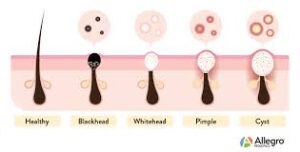
A pimple is just a spot on the skin that may result from excess dead skin and sebum (an oily and waxy substance from a gland in a hair follicle) that gets trapped in the pores of the skin. If a pimple is left untreated it may evolve into something more aggressive such as a pustule or papules.
Pimples result when the shedding of skin (which happens naturally) is left behind with oily sebum which then bond together and form a blockage. This happens a lot during puberty when the skin becomes thicker. What happens is that the sebaceous gland continues to produce sebum behind a clogged pore resulting in a pimple. Bacteria may then grow behind the pimple and make the pimple grow larger.
Pimples may also be caused by changes in hormone level, certain hair and skin products, side effects from various medication and family history
A blackhead is a clogged hair follicle in the skin. A blackhead will result when dead skin combines with oil to block a pore. A blackhead has an open head whereas a whitehead is covered by skin.
A blackhead or whitehead can occur with or without acne.
Blackheads and whiteheads can also occur as a chronic and inflammatory condition with inflamed pustules, papules and pimples; this is called acne.
Blackheads and whiteheads are usually caused by oil production in the sebaceous glands that increase during puberty. It is common for acne to develop during puberty along with blackheads and whiteheads.
Blackheads and whiteheads can sometimes be caused by some skincare products that block the pores, which then allows sebum to build up.
Touching, picking and squeezing at blackheads and whiteheads may aggravate them and cause irritation and cause infection to spread.
Consistency is key when it comes to managing blackheads. While they may be persistent, with the right skincare routine and treatment approach, you can effectively minimize their appearance and prevent future breakouts. If over-the-counter treatments don’t provide satisfactory results, consulting a dermatologist for personalized advice and treatment options is recommended
An abscess is a collection of pus that has built up in a sack in the tissue of the body. An abscess is usually red inflamed skin that is also painful and has swelling. An abscess can occur in any kind of tissue, but usually occurs in the skin surface in which case it’s known as a boil. An internal abscess can be difficult to identify, but usually cause pain in the area and a high temperature.
Abscesses are usually caused by a bacterial infection in which dead bacteria has built up to create pus. An abscess may need antibiotic treatment and can also be treated by cutting it open and draining it.
Aggressive Acne
Some people may suffer from particularly aggressive acne. This is referred to as severe acne or cystic acne.
Cystic acne is characterized by large, deep, inflamed legions which include a lot of nodules or cysts.
Cystic acne can huge a huge impact on the person who suffers from it. It may impact their appearance, they may be particularly self-conscious therefore affecting their self-esteem and the quality of their life.
Aggressive acne is more likely to leave scars behind. They are more likely to scar due to how large and deep the legions are. It is very important that severe acne be treated properly to avoid scarring.
Aggressive acne can affect any part of the body as normal acne would but it is more but may be more prevalent where sebaceous glands are.
It’s essential for individuals with aggressive acne to seek professional guidance from a dermatologist or healthcare provider. Tailored treatment plans can address specific acne concerns, minimize scarring, and improve the overall appearance and well-being of the skin. Early intervention and consistent management are key to effectively managing aggressive acne.
If you found this website useful, please share it on your social media.
Some Useful Links
A Great Blog – https://www.facingacne.com/blog/
https://www.acnestudios.com/eu/en/home
https://en.wikipedia.org/wiki/Acne
https://www.medicalnewstoday.com/articles/107146.php
https://www.mayoclinic.org/diseases-conditions/acne/symptoms-causes/syc-20368047
www.bodybenefits.biz/our-treatments/medical-skin-conditions/acne
https://www.independent.ie/style/beauty/15-ways-to-manage-adult-acne-35373766.html
www.acnepaper.com/
https://www.healthline.com/health/beauty-skin-care/types-of-acne
https://www.nytimes.com/guides/tmagazine/skincare-routine
https://www.goodhousekeeping.com/beauty/anti-aging/a22850819/best-skincare-routine/
https://www.nm.org/healthbeat/healthy-tips/do-you-really-need-a-skin-care-routine